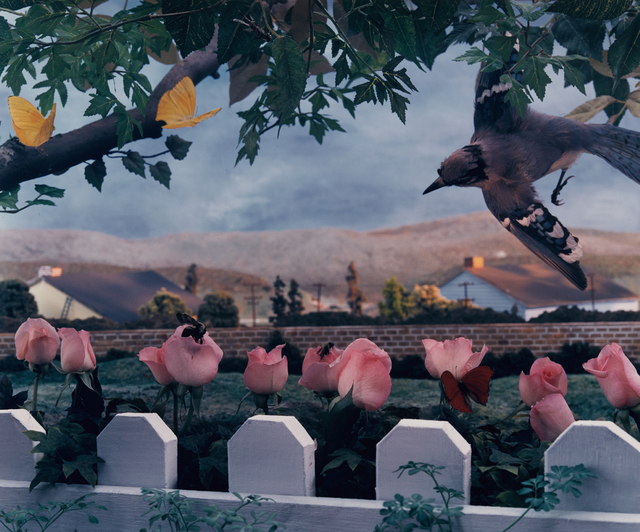
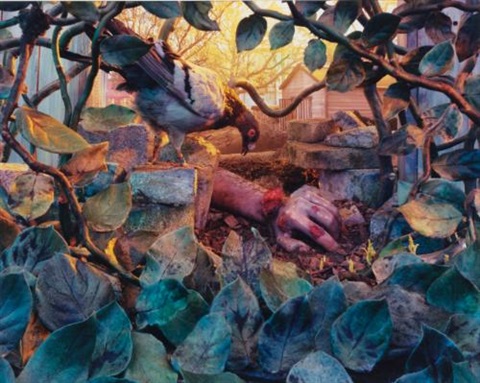
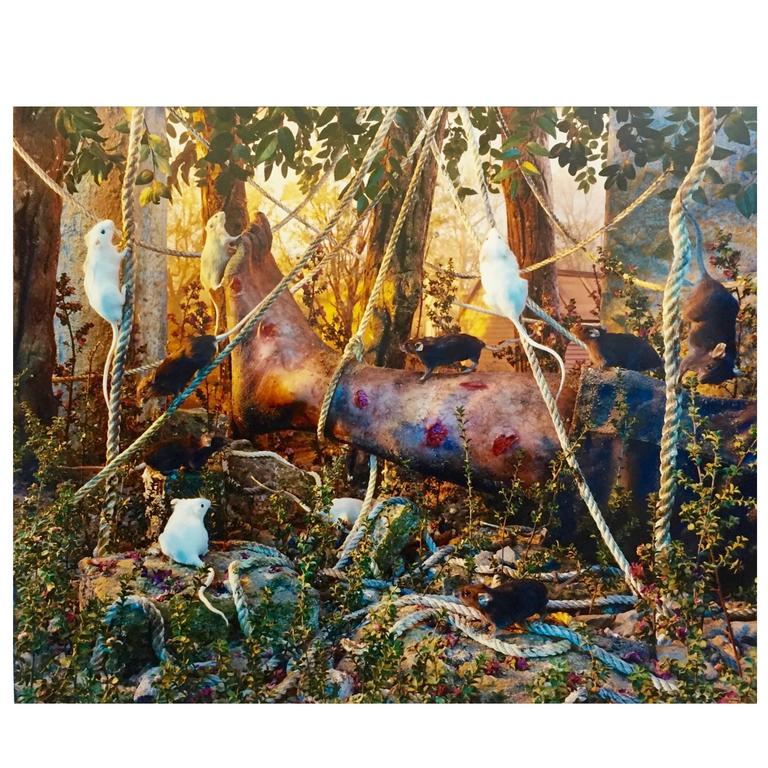
His first series of photographs after college was called Natural Wonder from 1992-1997. These photos were in the same location that his senior thesis photos were taken in Massachusetts. diving deeper into the beginnings of his work, these photos are focused around wildlife: Insects, plants, and animals. From the photos you get to see the disconnection that civilization has with nature. The wildlife is always shown in the foreground with signs of human existence in the background. Mostly consisting of suburban homes and interiors. These moments aren’t seen very often and depict very eerie, unsettling and in some cases grotesque, specifically the ones with human legs and arms. Yet his photographs are staged so beautifully you are drawn into them taking notice to the most minor details that help tell the narrative. The narrative is this case is reflected from external forces of his marriage falling apart, and the internal emotions that gave the vision for these photos.
Twilight
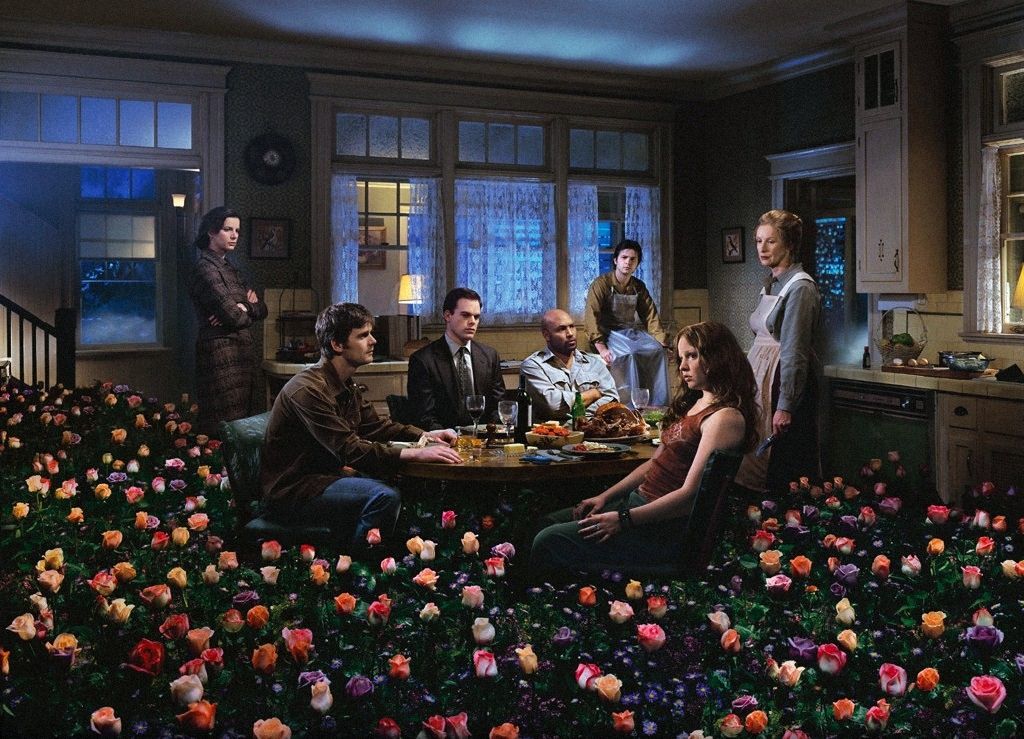
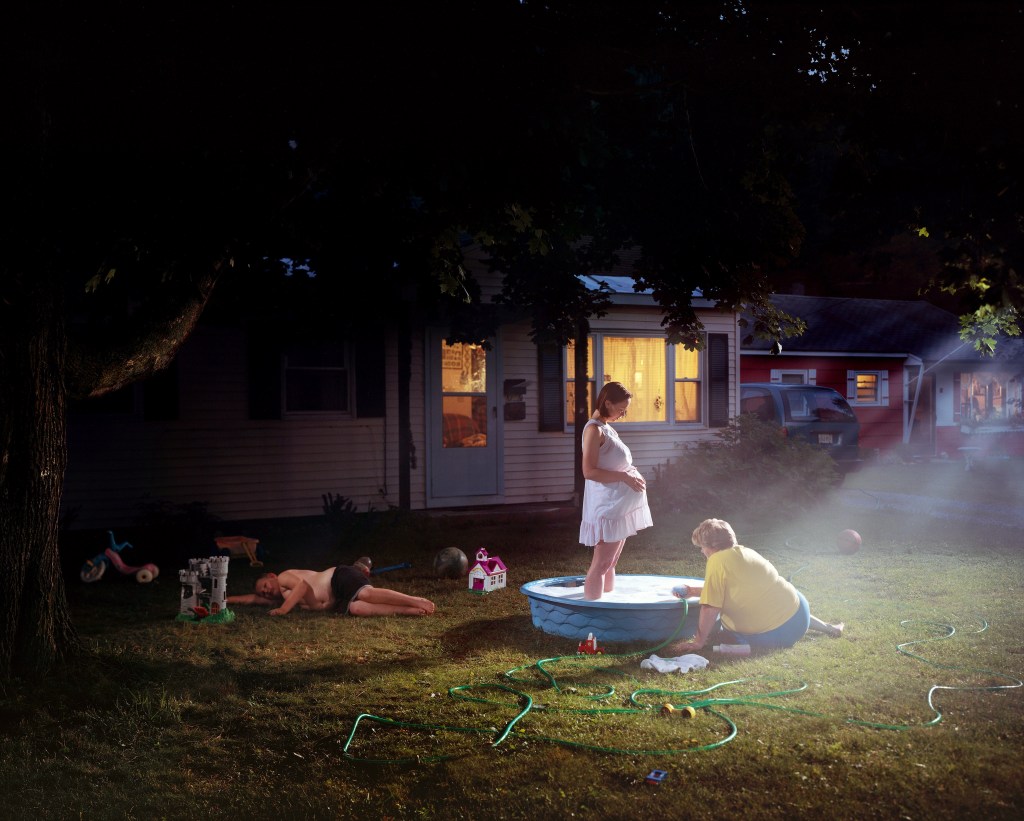
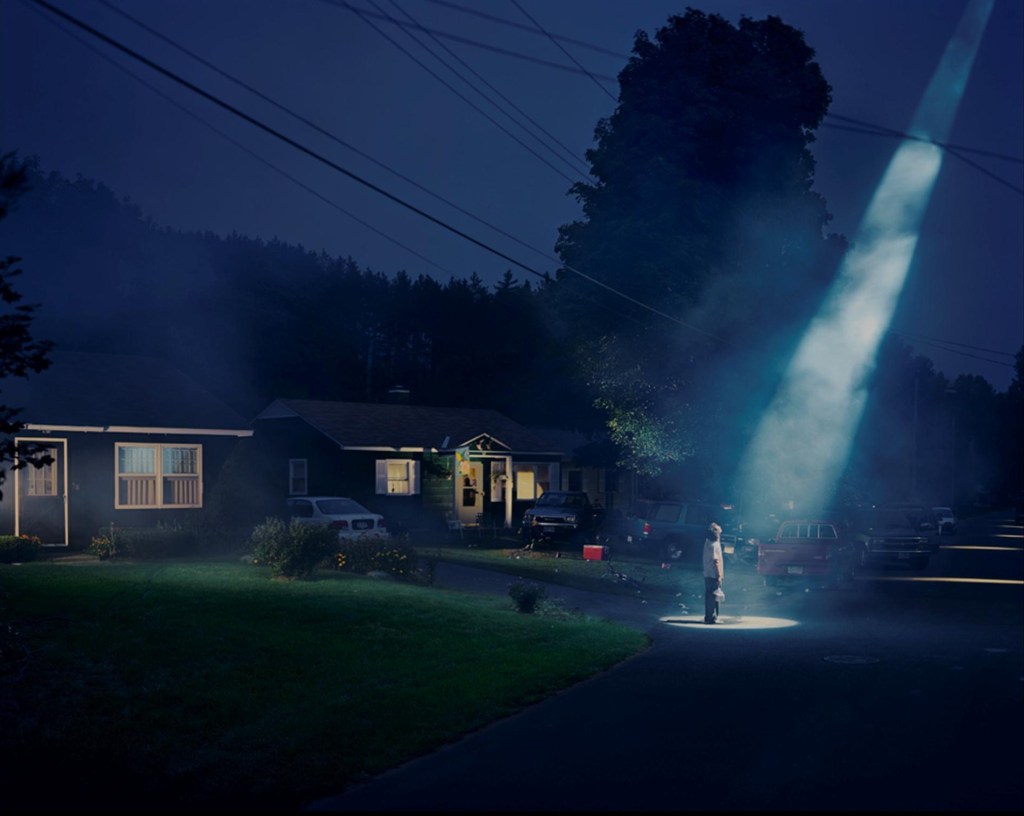
It’s interesting to see the progression and evolution of Crewdson’s work through his career. Seeing his first works stemming into his latest, he seems to remain fairly consistent with lighting and color and his fascination with suburban America as his backdrops and main focal points. Moving into one of his first exhibitions in 2000, Twilight was a continuation of his intricately staged sets. But these photographs illustrated humans rather that wildlife, compared to his first series Natural Wonder. These photos clearly show the cinematic style and quality that he is renowned for. The surreal nature of all the images tell stories of rebirth, death, and what lies beneath the surface. Contrasting with all of his other works, the Twilight series were all shot on location. Also, like many of his other series of photos, Twilight became a photo book which was released in 2003.
Cathedral of the Pines
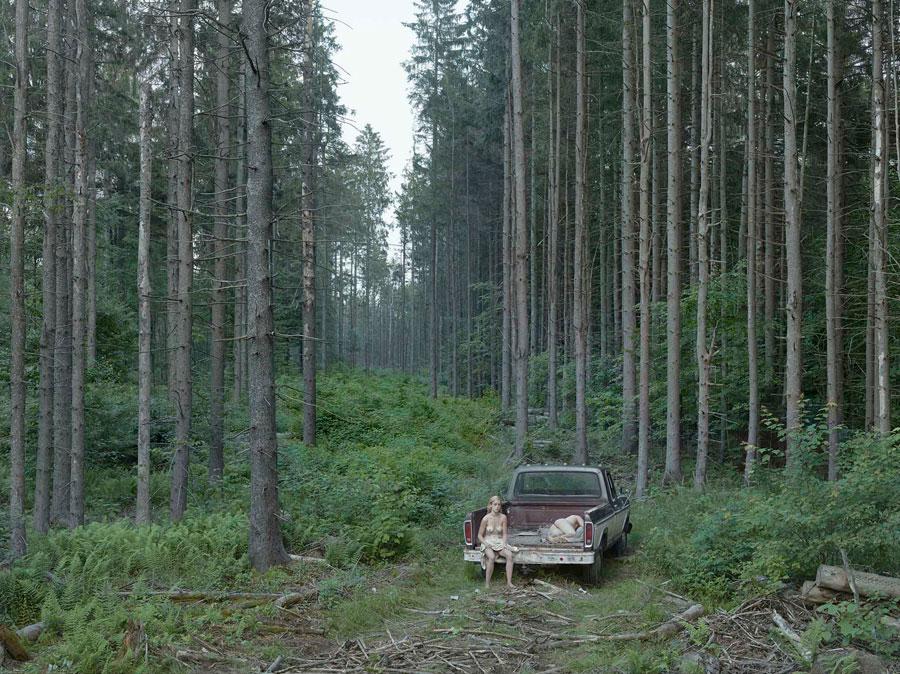
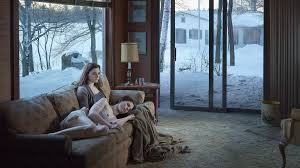
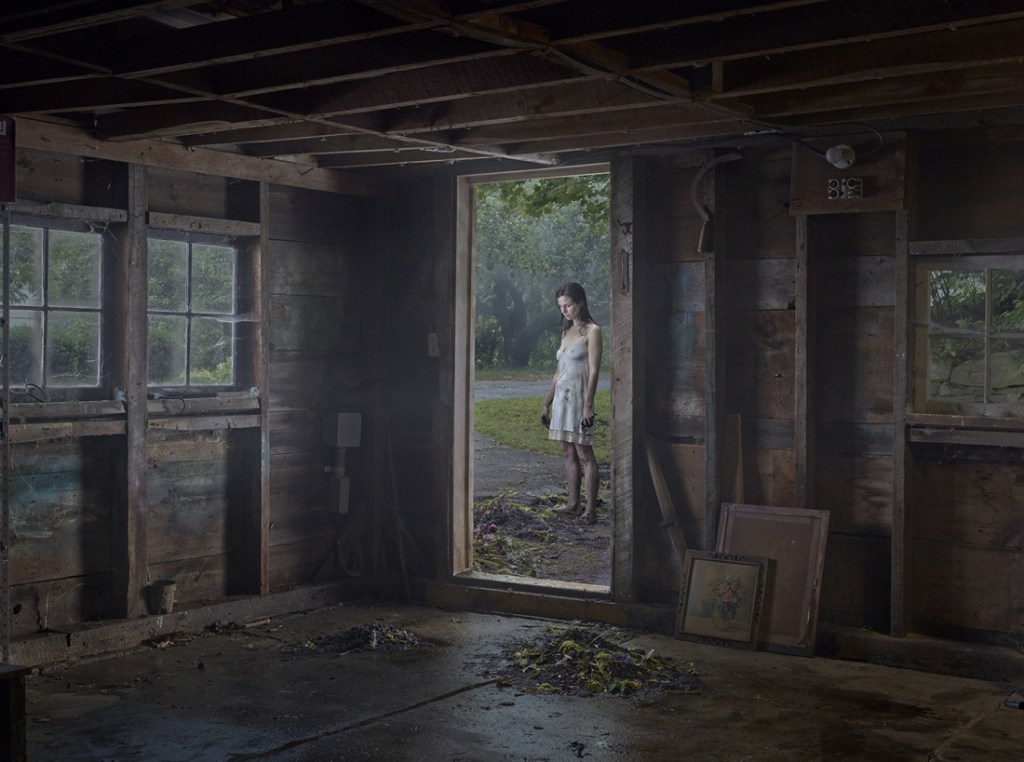
Crewdson’s work can be seen as a vague representation of his childhood. But they can also be seen as dark, and isolating, which can be referenced in some form in all his works, namely his newest being “Cathedral of the Pines.” These photos take place, deep in the forest of Becket Massachusetts. His interest in taking real life and ordinary situations and making them mysterious can be seen yet again so beautifully staged and composed. This series has an even more personal feeling, with many of his photos coinciding with the current state of his life. In fact, the photos were taken in Becket, Massachusetts. The same place that Crewdson moved to after living in New York for 25 years. Here is where I moved into an old church that was converted into a home. Crewdson had strong affiliation with this church and the area around it. The title of this body of work actually came from a trail the he found while hiking in the woods in Becket. “These pictures seemed to capture exactly where I was at that time. It was one of those unusual aesthetic awakenings. We have a few of those in our life. They came once in a great while.” (Smyth 2017).
Final Remarks
Crewdson is one of the most photographic legends of the 21st century and is an inspiration for many photographers and artists. The traditional approach to photography being documentary that Crewdson learned at Yale is combined with the oppositional style of fictions and construction. His images show the emotion and poverty that these people face every day. And in some cases, can leave his audience with more questions than answers. His photos are these moments in between moments, the setting of the sun, the interior and the exterior, of homes and humans. His work is a psychological experience that can visually show you, anxiety, fear and Desire. And can leave you wondering what came before or what happens next.



 PhotoChronologies