xinlan Zhang
xinlan Zhang
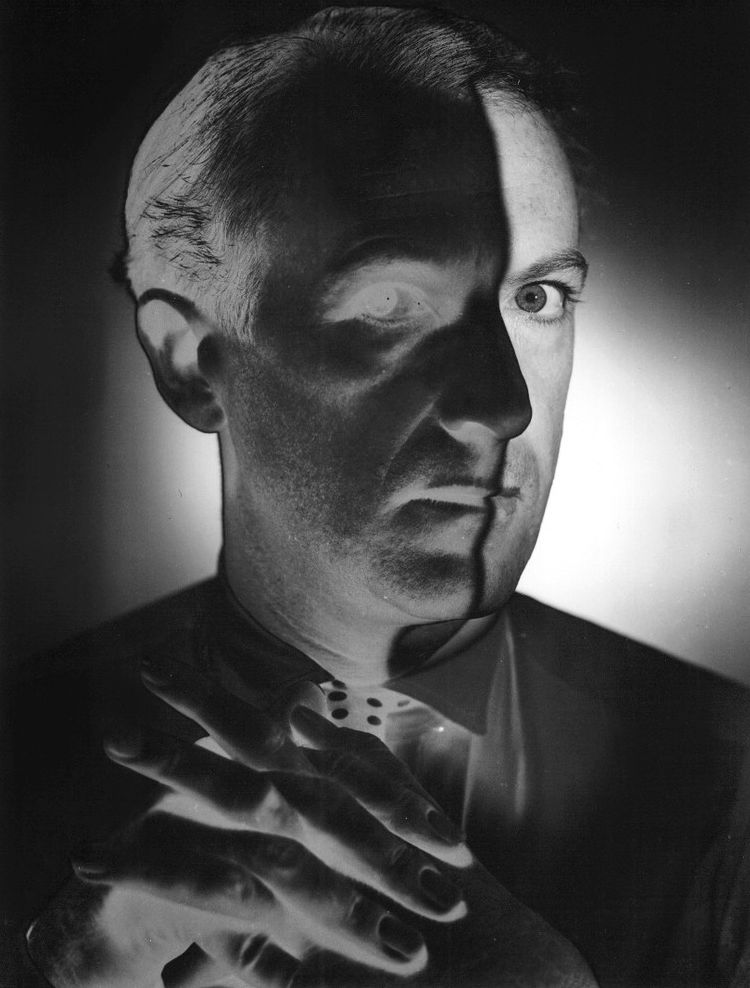
This first image of Cecil Beaton was taken by Erwin Blumenfeld in 1946 as a part of a private collection based in Switzerland. This picture is a gelatin silver print. Blumenfeld was known for experimental techniques in the darkroom, Dada and Surrealist influences, and groundbreaking street work. Blumenfeld had a lot of influence in the fashion world because of his combination of elegance and eroticism. His portraits typically embodied dramatic lighting. This picture provided my inspiration because of its eery- mysterious vibe it emanated.
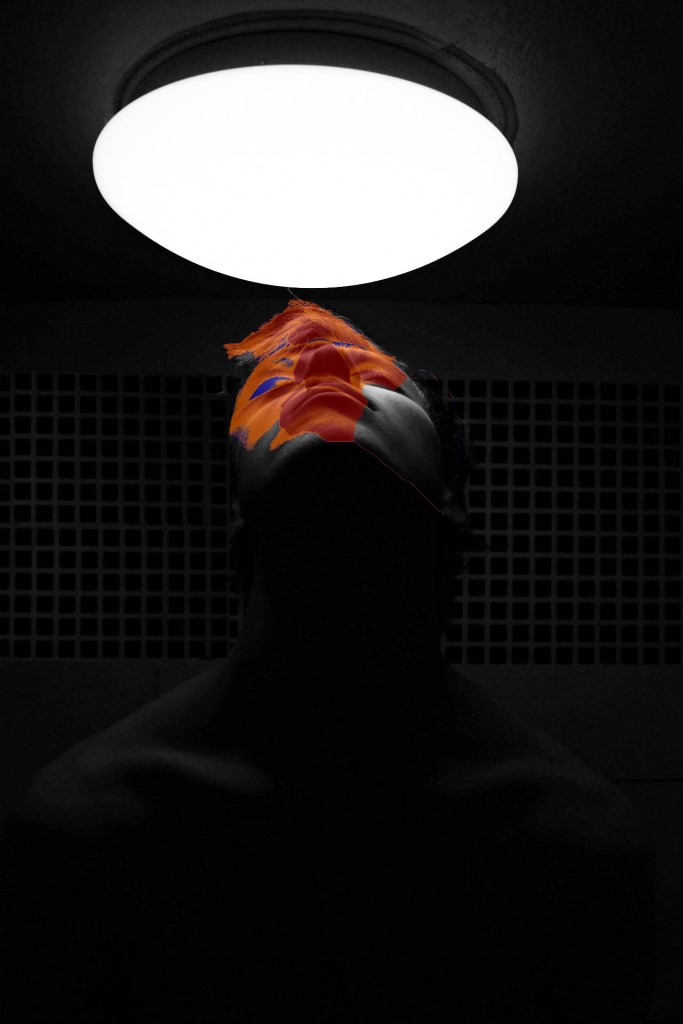
My response image was taken in the Pattee and Paterno Library. I wanted to mimic the partial inverted feel of the original image. To do so I went into Photoshop and selected a portion of my model’s face and applied a colored gradient to it. I added color because I wanted to add my own touch to my response. I darkened and added contrast to my picture to hide the shadow in effort to create an ominous feeling. I took this picture under a low-hanging ceiling light to produce the harsh lighting that Blumenfeld’s portraits typically had. Because of lack of eye contact in my photograph, I had the model take off his shirt to make the image more intimate like my inspiration photo was.
This first photo is an image of a power station taken by Alexander Rodchenko (1929). Rodchenko was an artist, photographer, and sculptor. He was well known as one of the founders of constructivism in Russia beginning in 1913. I chose this photo because of its shot at a odd angle like many of Rodchenko photos, but also because of its architectural and geometric look. I also enjoy the natural daylight along with the reflections off the windows.
The photos above was my inspiration for this imitation of Rodchenko’s style. As previously stated Rodchenko used odd angles which I matched in my photo. My photo is angled the same way but is a building the is longer, not higher than the building Rodchenko photographed. I would say lighting is very similar but I have shadows from the water tower that are not displayed in Rodchenko’s image.
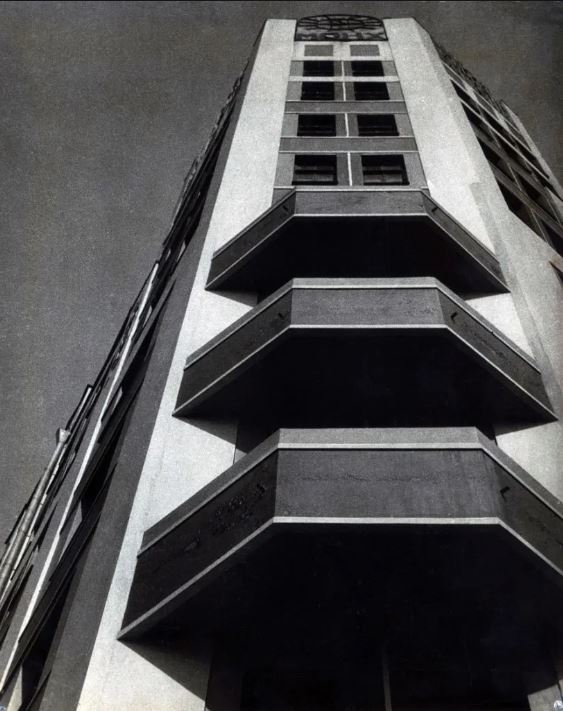
This image provided inspiration for my assignment. Alexander Rodchenko (1891-1956), a Russian photographer, was one of the founders of constructivism, a movement that originated in Russia in the 1920s. He believed that art should be “constructed” with a social purpose. After the Russian Revolution in 1917, progress was linked to industrialization; art celebrated this new world and its new customs. Rodchenko led the avant-garde in this new way of seeing, with his odd angles (from very high or very low) and unusual perspective.
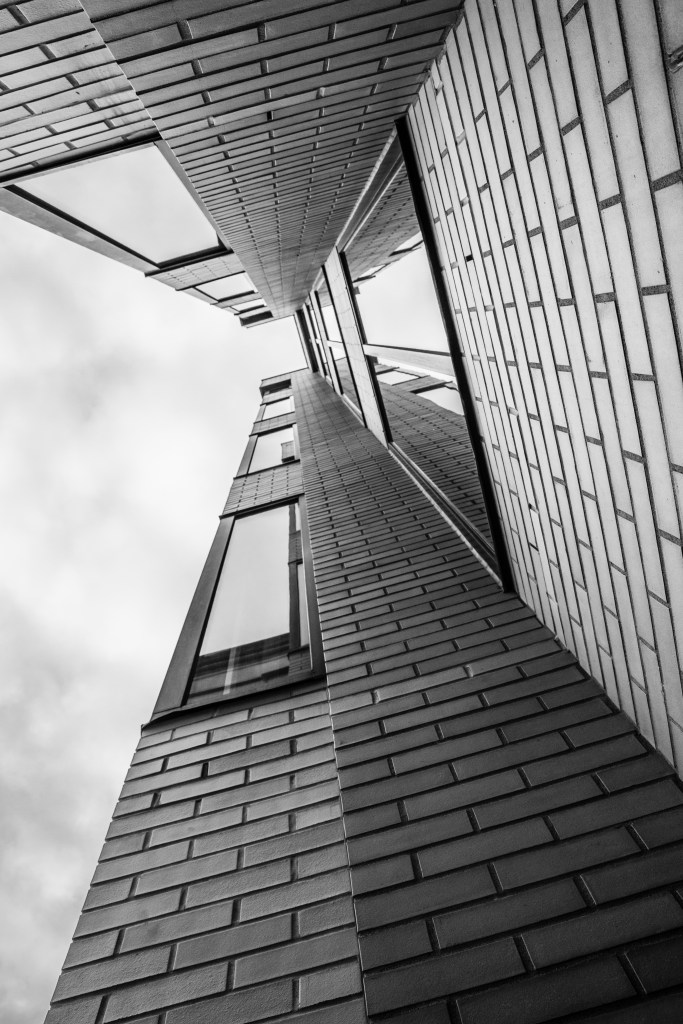
My response image was taken at Pattee Library on Penn State Campus. I like Rodchenko’s play with perspective and angle, especially the resulting diagonal lines and geometric shapes. My image was taken with a wide-angle lens (24 mm) at f/9, ISO 800, hand held at 1/250 sec. The wide angle creates converging lines that recede from the camera to a vanishing point in the sky. Upward, vertical lines are more difficult to accept as normal than similar receding lines in horizontal images. I think this effect – redefining perception – was what Rodchenko sought in much of his work.
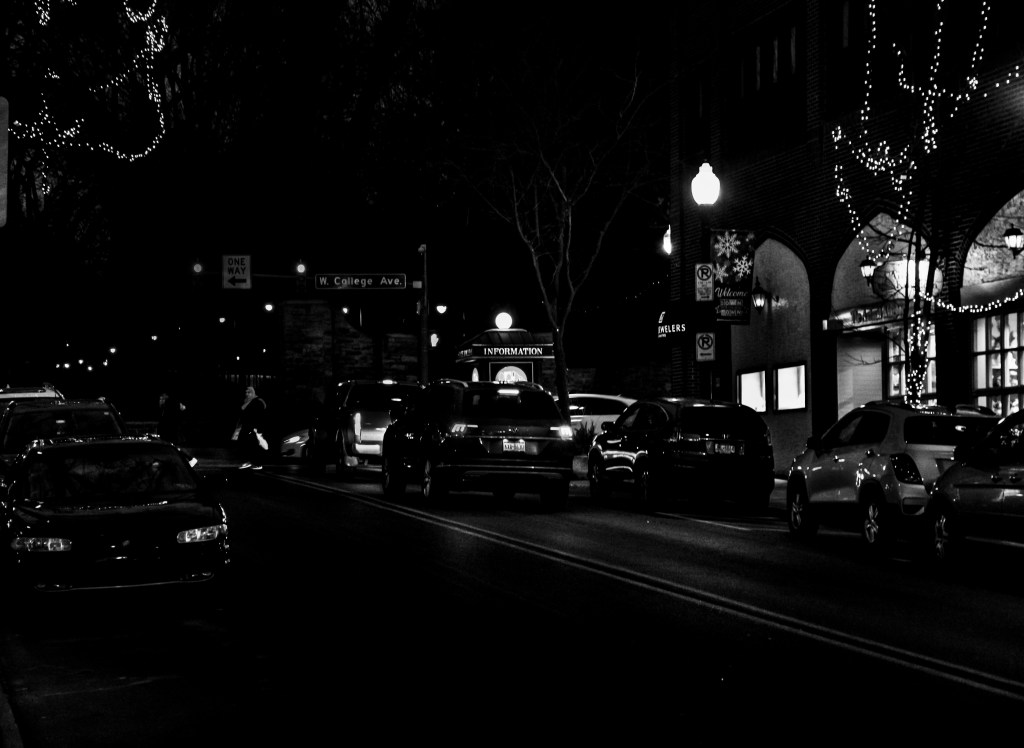
For this assignment, we were supposed to choose a photographer and a photo and try to emulate his or her work to some extent or create a work that is inspired by said photographer. The photographer I chose was Alfred Stieglitz, an American photographer who was known to be instrumental in making photography an accepted art form. For this assignment, I was inspired by “From the Back Window” which is pictured below. The photograph was published around 1915, 5 years before the 1920’s but close to the time period. I wanted to emulate the lighting and coloring style somewhat, but I also wanted to diverge a little bit from the photo instead. For both images, I decided to focus on the ground rather than the skyline and while its still there in my photos, it is not as prominent. One of the key things I decided to focus on was trying to emulate the lighting rather than the subject matter.
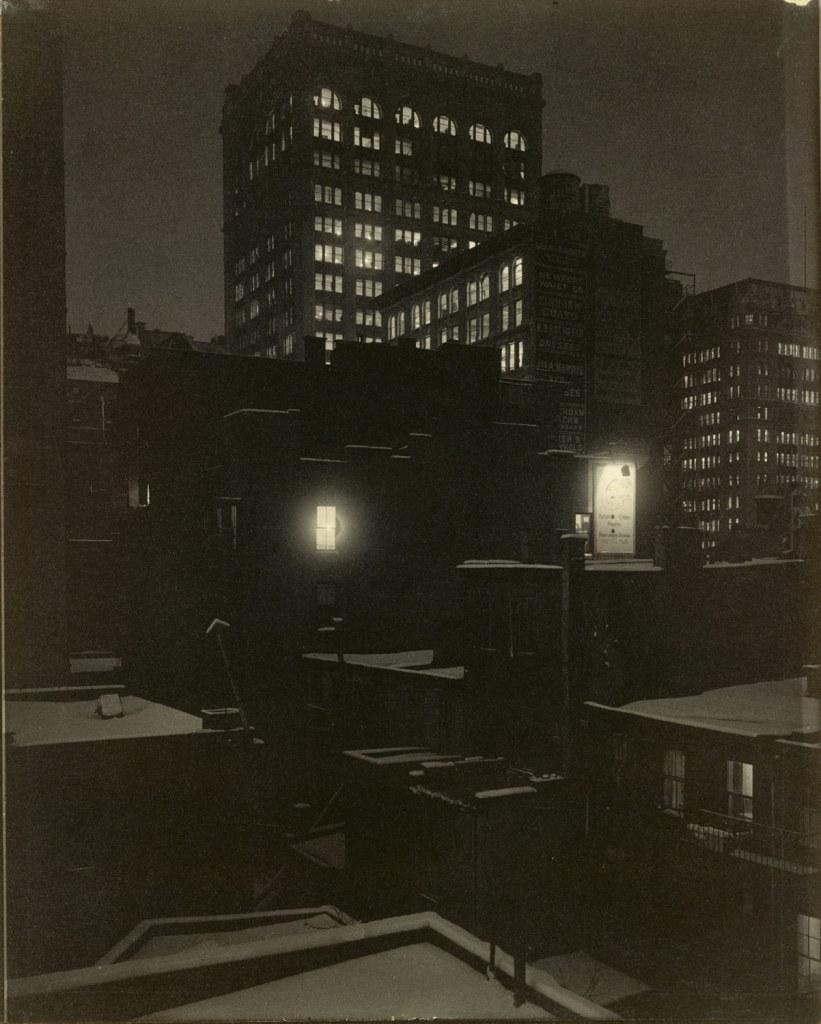
For the first photo which is shown below, I started out taking photos of cars for this assignment, however, I also decided to combine all the elements of the surrounding area to try to emulate the lighting of “From the Back Window” as much as possible. Considering that the lighting is coming from a different angle, I had to play around with the settings of my camera and go into Camera Raw for more accurate emulation of the black and white style of photograph. I feel like the results were not perfect due to the time and day, but I feel like I could have made parts of the image slightly brighter to convey that lighting that I was trying to emulate.
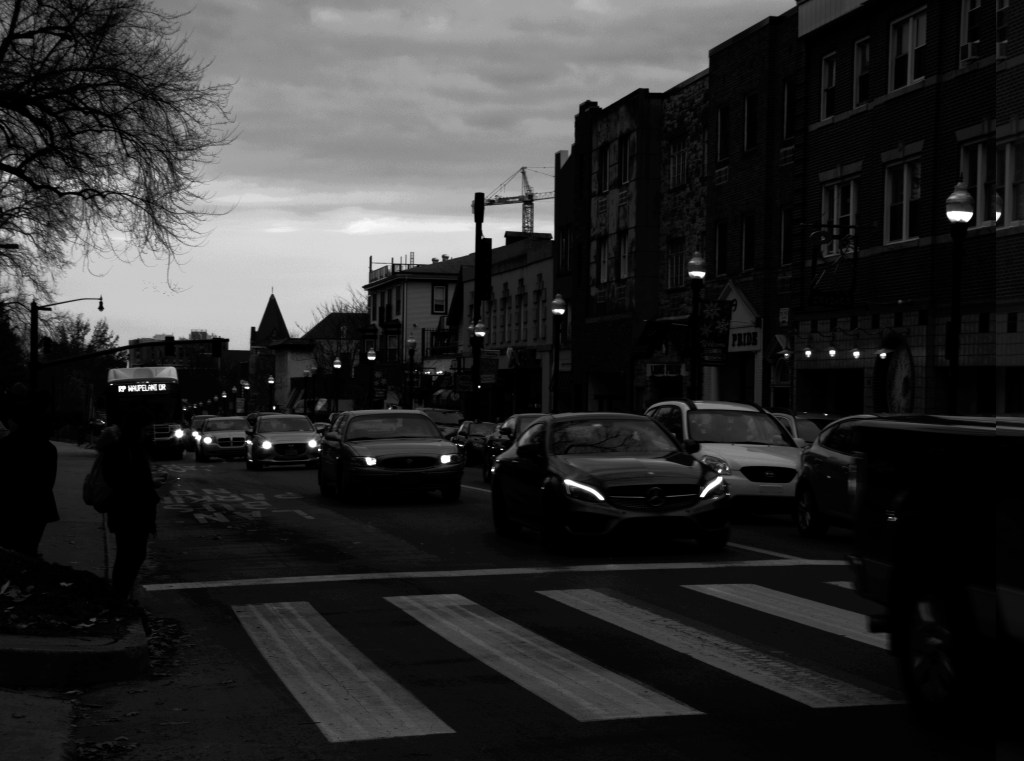
The second image that i took that I tried to emulate with was more successful in capturing the dark parts and the lighting was much stronger, but I could have angled the shot better from my point of view. However, I feel like I relied too much on the street lights too much and the image turned out too dark in my opinion. One thing that I enjoyed about taking this photograph was that the lighting had more of an impact on the photograph compared to the last one and better emulates that old-timey style and pronounced lighting.
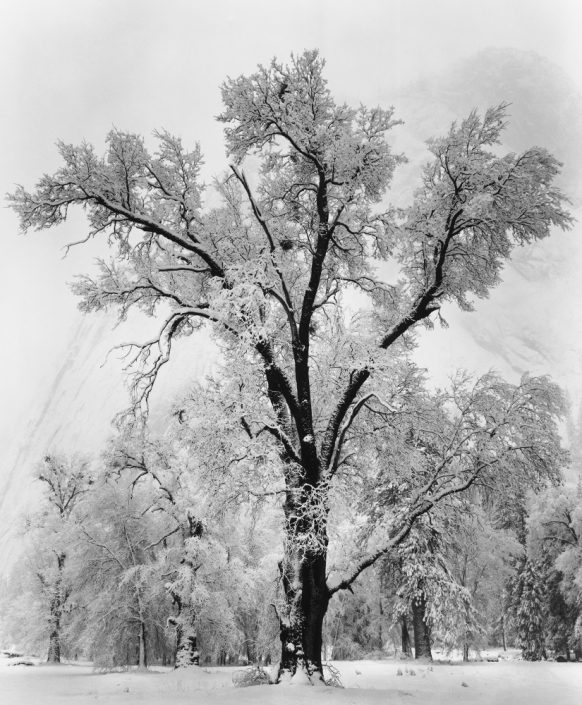
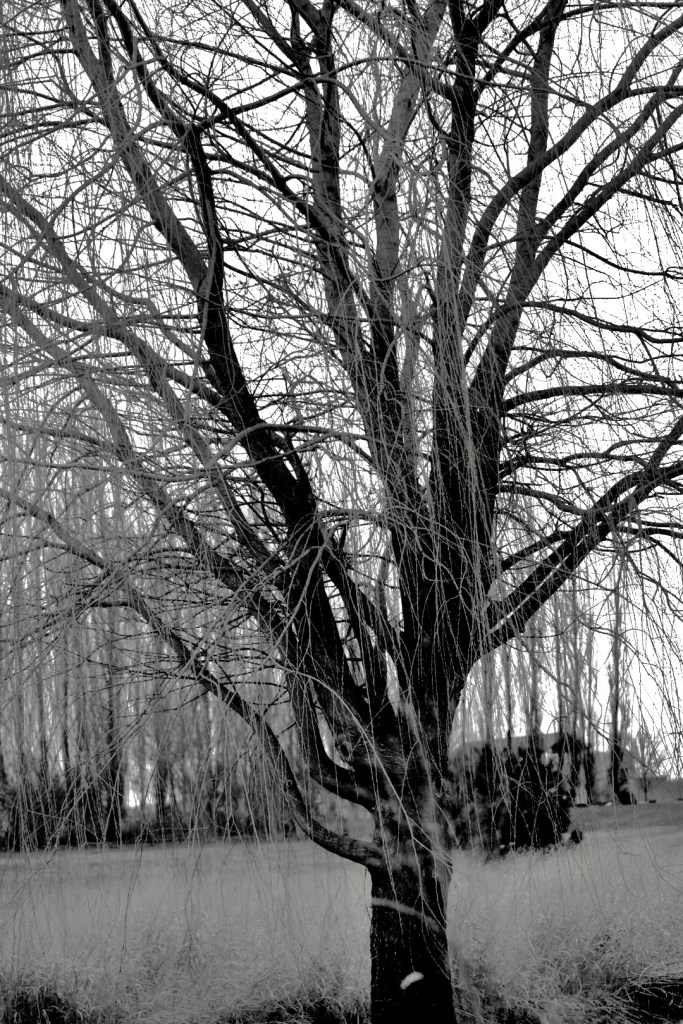
I favor nature photography, so I chose Ansel Adams for my inspiration. Adams was know for soft yet expressive nature stills. The photo I chose to imitate was “Oak Tree, Snowstorm” from his Yosemite collection.
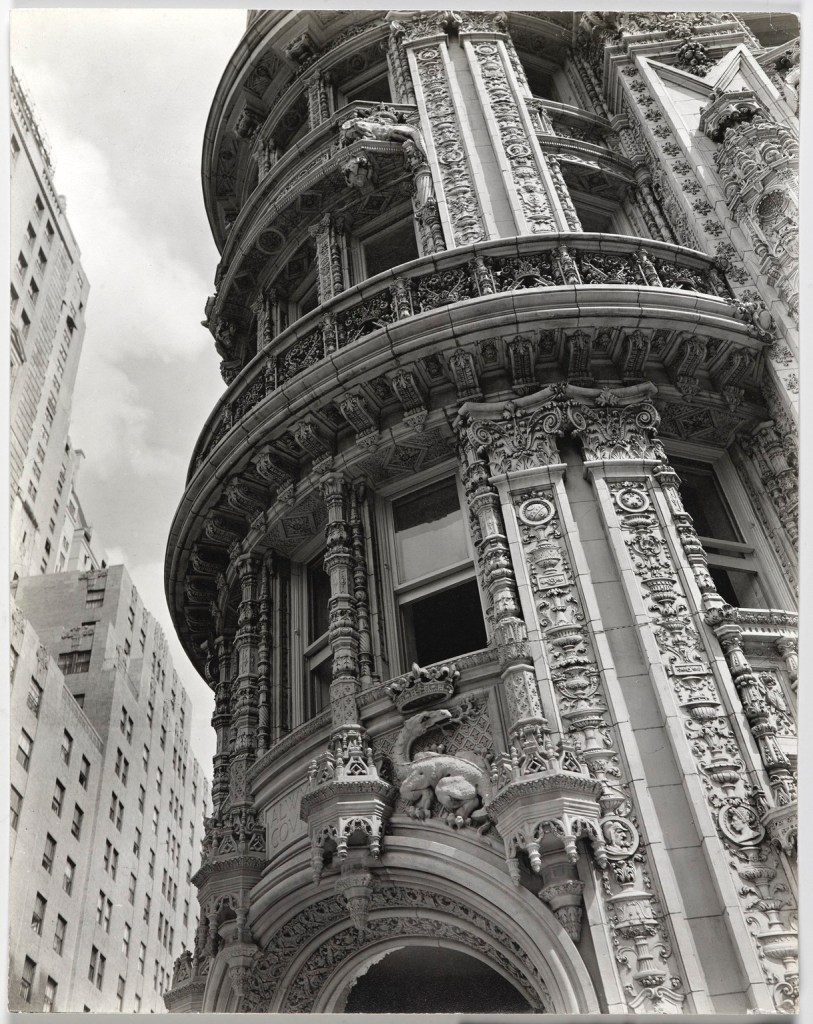
The photographer I chose for this assignment was Berenice Abbott. I specially looked at her work documentation work of New York in 1935. The image I chose was Daily News Building, November 21, 1935.
My photo imitation:
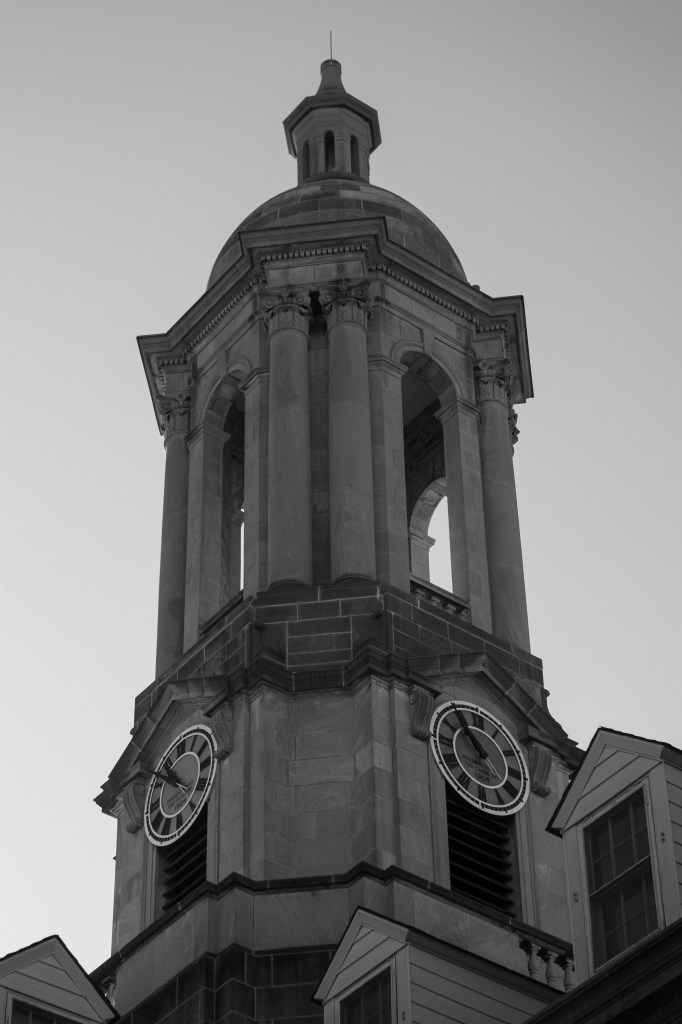
While creating this image I tried to follow the subject matter that Berenice photographed. She photographed what changed in New York City and I saw this building as something that was just under construction last semester. I know much did not change, but I see this building as one of the main buildings here on campus. I chose Berenice because I typically go after people who take portraits and I wanted to try my hand at photographing architecture, when I saw her image I was immediately drawn to it. Old main immediately popped into my head because I walked past it everyday last semester and I always wondered exactly what was going on up there. I tried photographing some other buildings that have changed over the years, but this one felt the strongest to me and I felt like it had the strongest connection to Berenice’s work.
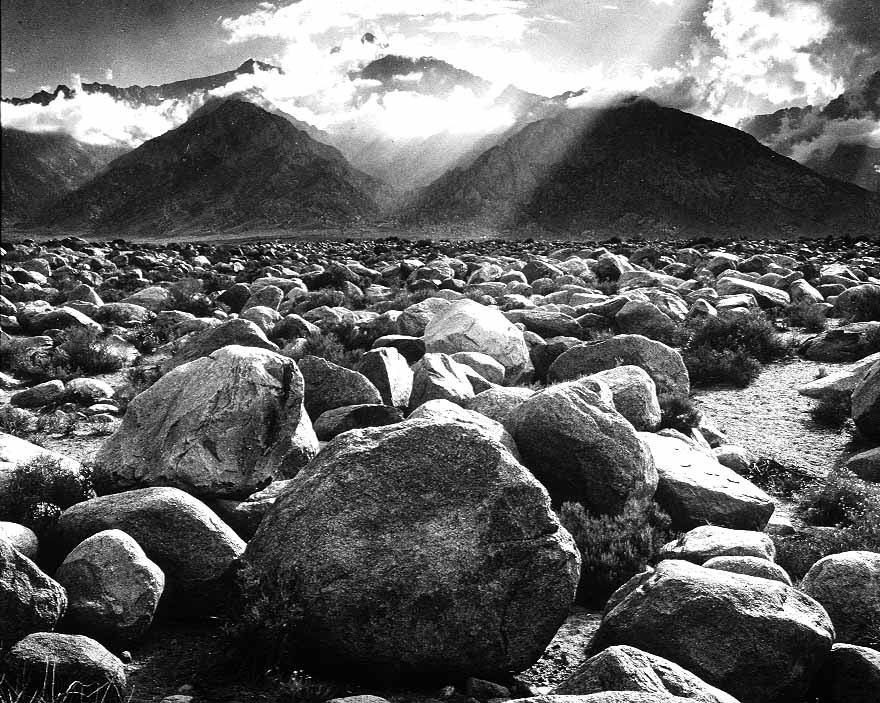
The photographer I chose for this assignment was Ansel Adams. He was known for his black and white photographs of the American wild west. The image I chose to imitate was Mount Williamson-Clearing Storm 1945.
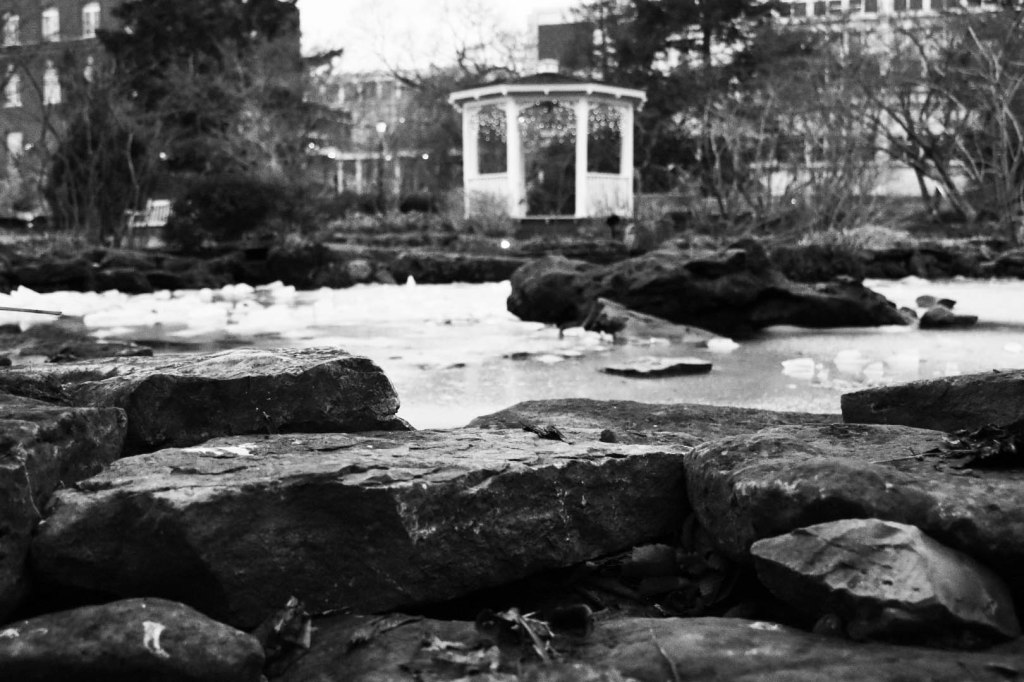
Creating this image, I was trying to imitate Adams’ style through his deep contrast. This photo represents his style through the contrast between the rocks, ice, and surrounding buildings. I tried to imitate his nature style through a small spot on campus. I found myself drawn to Ansel Adams for his specific style of photographing nature. When I first began photography, every photo was of surrounding nature. I love the raw aspect and tranquility of it.
In this assignment, we were instructed to start with a photograph from the 1920-1940s. In this time period, I found one of August Sander’s photographs. I felt inspired the more that I looked at his work. I have always enjoyed taking portraits and that is what a lot of Sander’s work consisted of. The photo that I was inspired by was titled “Young Farmers” and was taken in 1926. Sander was a German photographer who lived from 1876-1964.
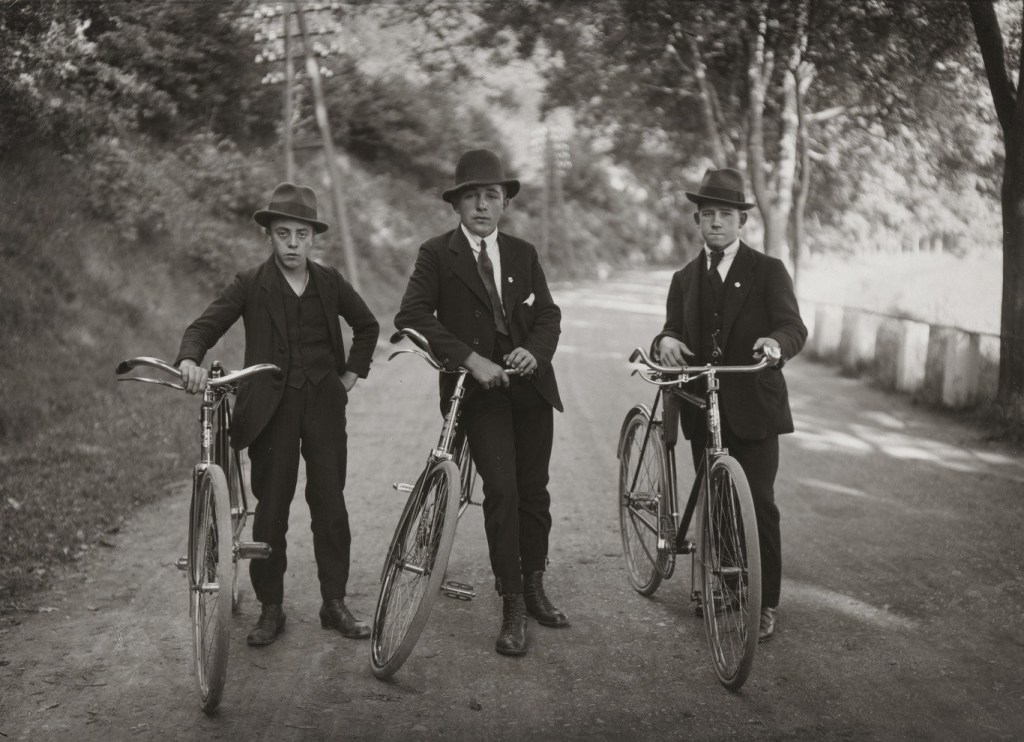
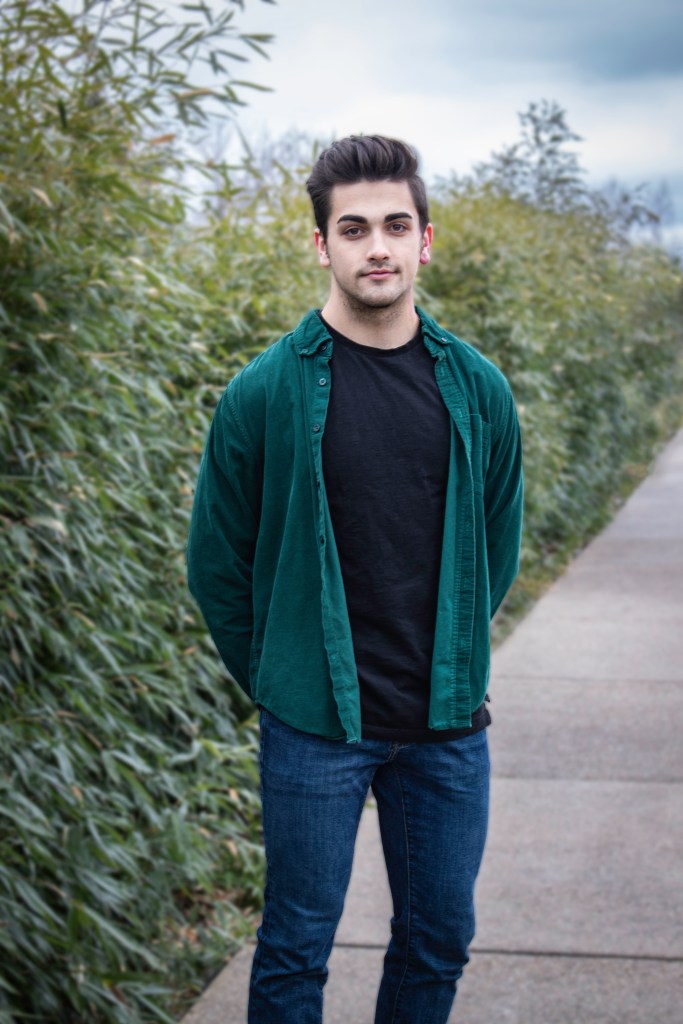
When taking this photograph, I knew in order to achieve the same style as Sander I needed to have the background out of focus. In oder to achieve this, I opened the aperture as much as possible, which on my lens is 3.5. I wanted my subject to have a very bland expression on his face because many of Sanders subjects were not smiling in their photographs. I chose to not make my photograph black and white because I like my photographs to have color more than not.
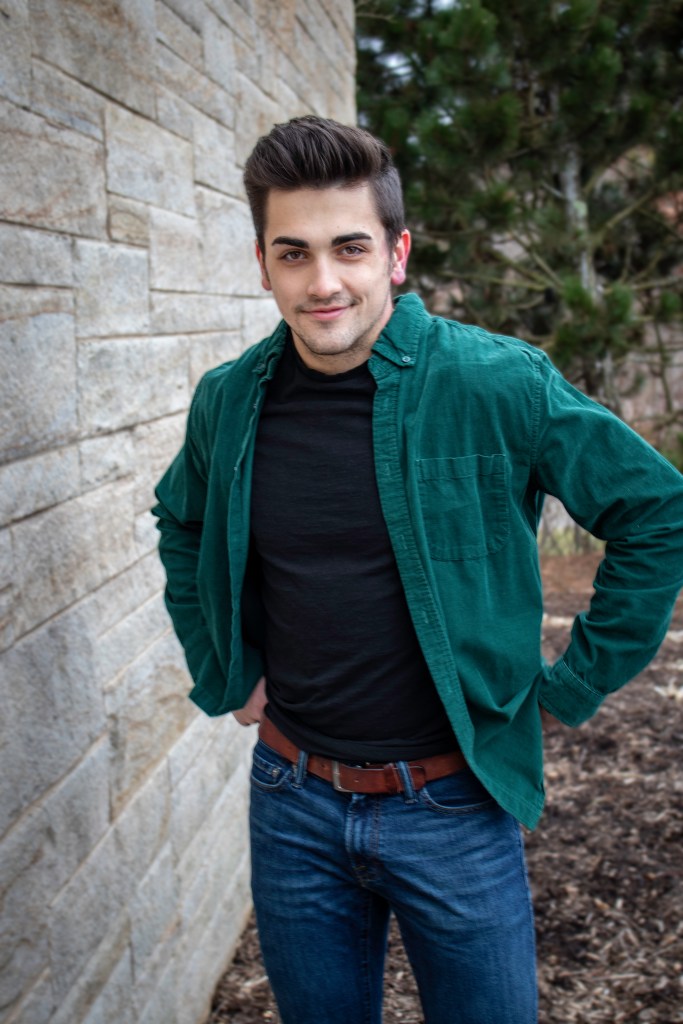
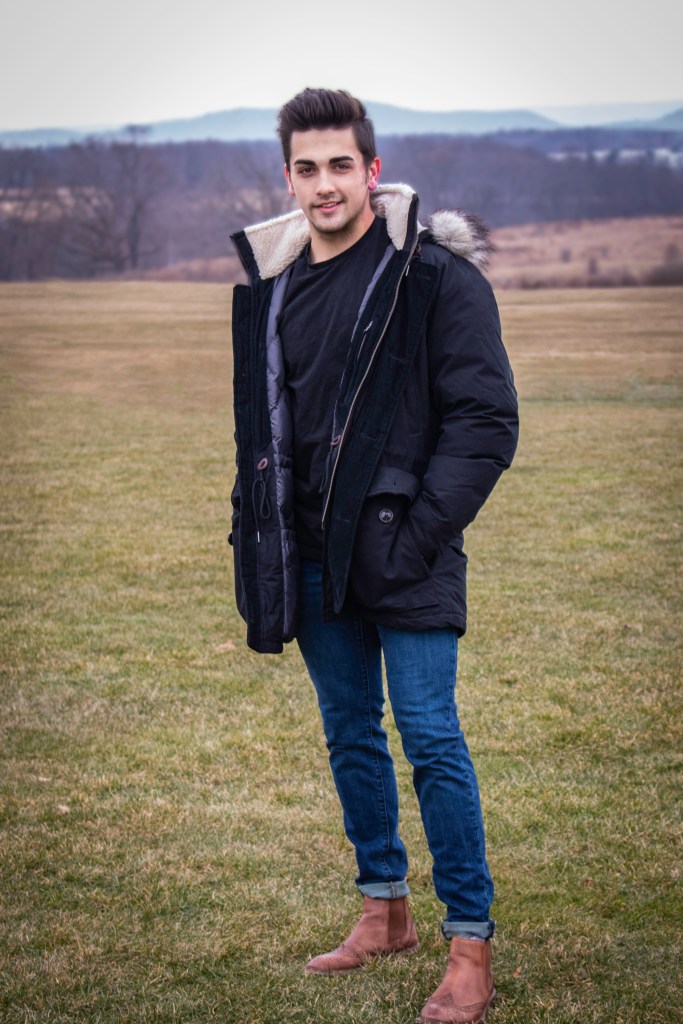
These photos were still inspired by Sander’s work, and I personally like the one on the left the best out of all of these images. Although, I do not think that it fits his style as well as the one I chose. I made the background out of focus in these images and really focused on my subject, but I think the facial expressions do not match the photographs that Sander would have taken back in his time.
For this first assignment I am going to be doing Edward Weston. I like his still life and the detail that is in his work. It is full of not symmetry but geometry that does not always seem to flow natural but almost makes sense. Edward Weston is an American from Highland Park Illinois. The date of the picture that I put up is unknown. However it was photographed between 1886 and 1958 because that is the dates that he was born and than died.

My attempt:
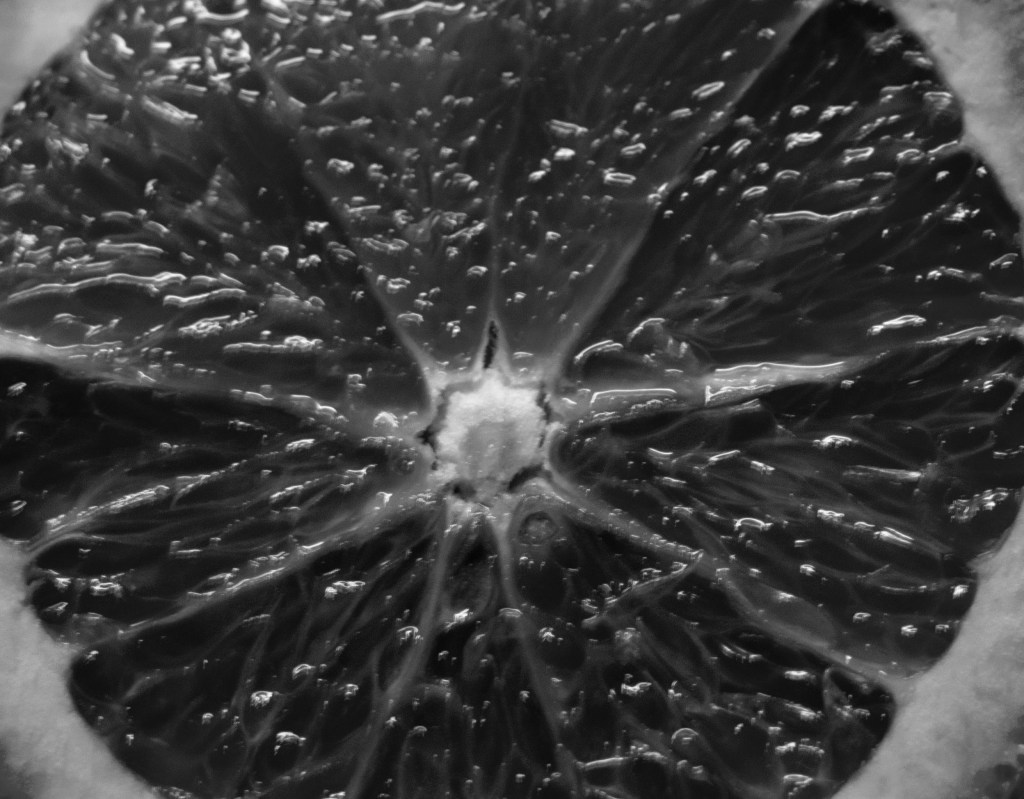
When I took the photo I I tried getting as close as possible and than with photoshop after I cropped the image in. When I was shooting since I was so close it was a bit hard to focus and I have a 1/8 of a second shutter. The image is still quite detail with out doing much to it besides cropping and making it black and white. I found that keeping it black and white instead of the color made the detail come out more and we already know it’s a fruit. You also can see that it looks really juicy. Almost like you want to cut off a piece and eat it.
My other try:
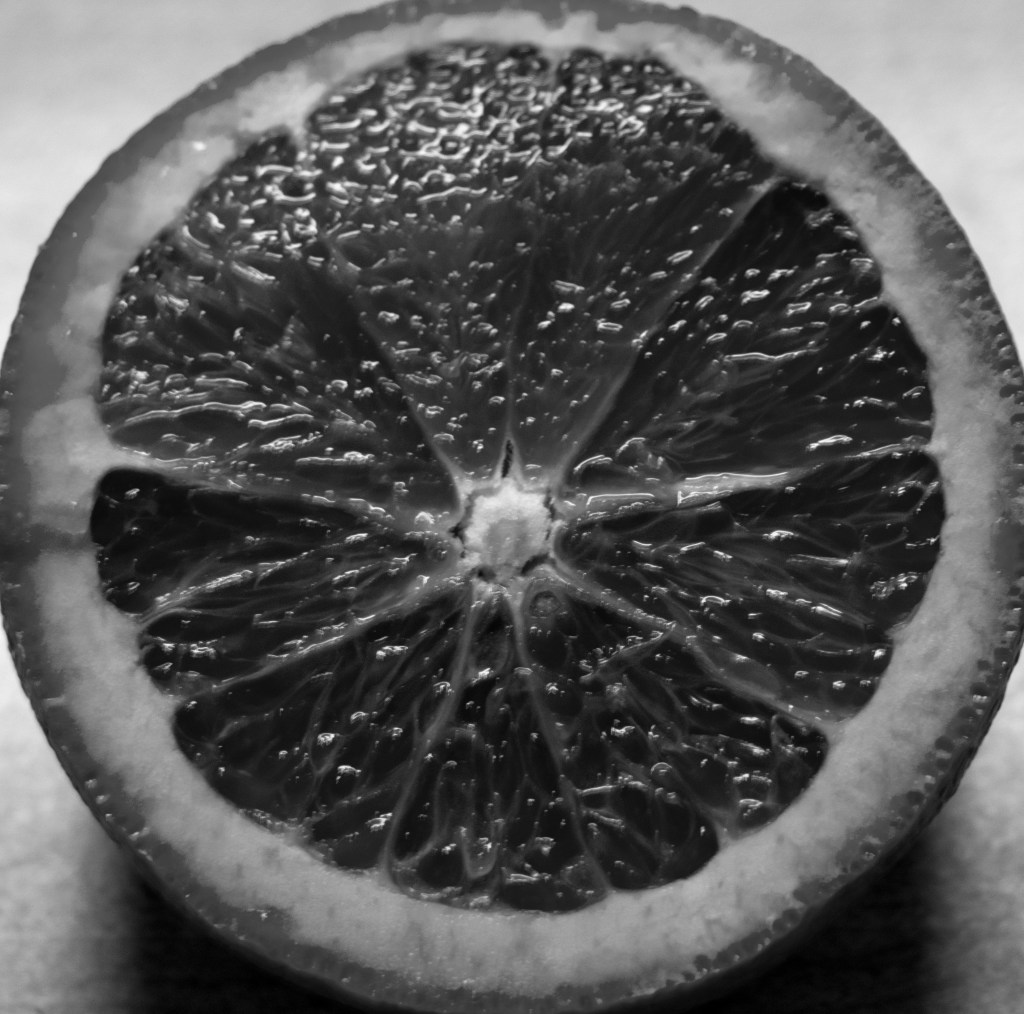
This attempt was one where I didn’t fully crop the image. I thought it was a bit distracting and once I cropped it it seemed like it fit more of Edward Weston style.
 PhotoChronologies